

Less service effort, strong product data and enthusiastic B2B and B2C customers.
PIM
Dynamics 365
E-Commerce
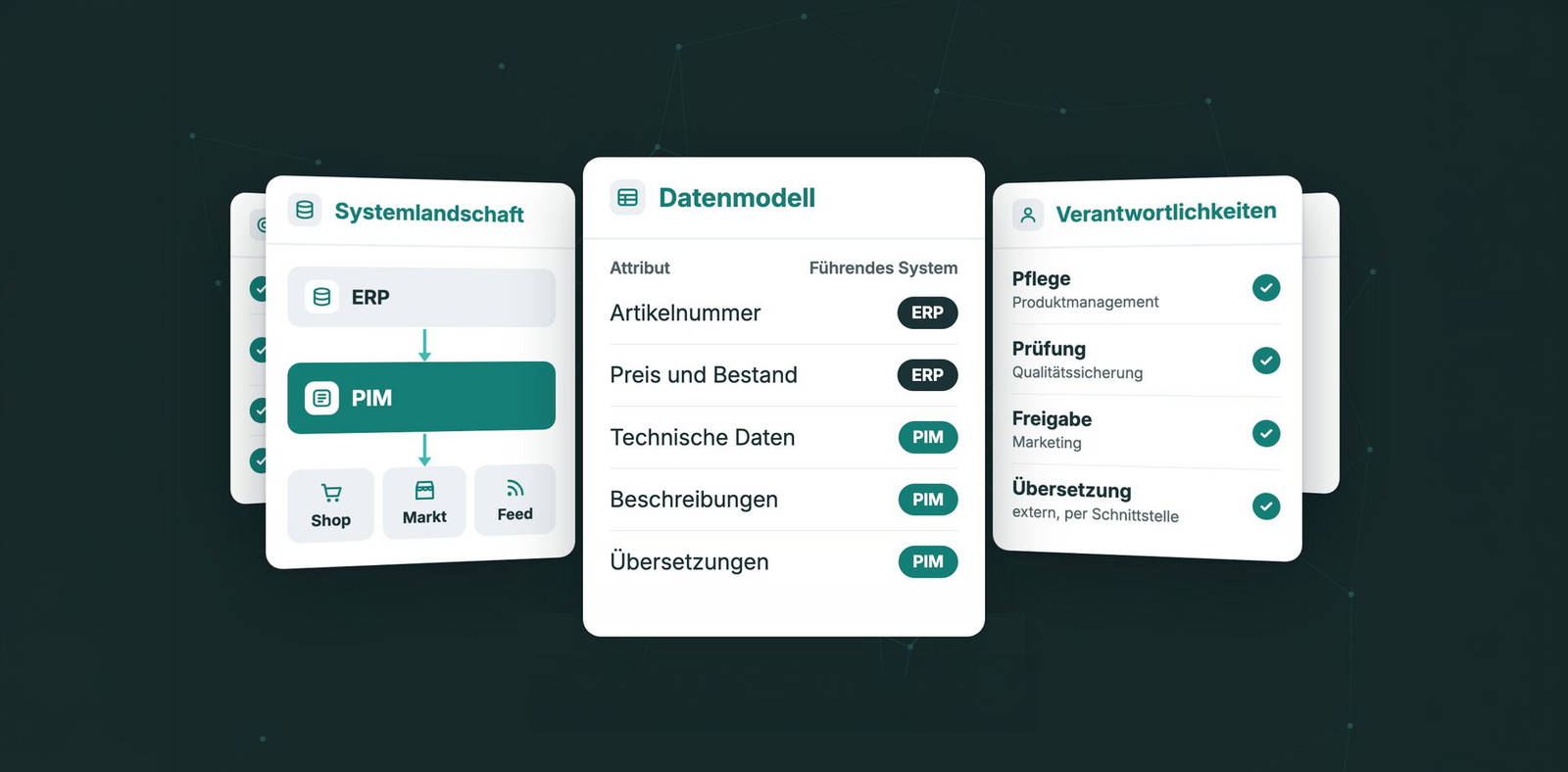
Together we develop a PIM strategy that fits your data, processes and systems, translate business requirements into a solid concept and support the implementation through go-live and beyond.












A PIM project starts with clear goals. Together we define which data will be managed centrally, which systems will be connected and which channels will be supplied.
In workshops, we clarify
The result is a clear project scope with a suitable system architecture and a realistic implementation plan.
First, we examine which systems your product data comes from, how it is processed in the PIM and which channels it should supply. Based on this, we develop the system architecture, define interfaces and assign responsibilities, so it is clear which system owns which data.
We plan goals, data and systems together before implementation begins.
Record data sources, channels and responsibilities, and clarify which system owns which data.
Define attributes, classification, variants and mandatory fields for each channel.
Connect the PIM with your ERP, shop, marketplaces and print.
Transfer and clean up existing data and train your team on the system.
Start with a first channel and add further channels, languages and workflows.
Less service effort, strong product data and enthusiastic B2B and B2C customers.


Automated workflows and reliable management of more than 25,000 product variants and components.


A lean publishing architecture connects PIM, EasyCatalog and InDesign in one automated process.

“[…] the API, which enables real-time data exchange between the systems with our ERP system Microsoft Dynamics NAV 2013. The NAV integration is a huge advantage here, because users don’t have to switch between systems.”
ESYON combines PIM consulting with experience in ERP, e-commerce, interfaces and operations. In a conversation, Daniela Baron and Anja Barz will assess which systems are affected and how best to get your PIM project started.


We analyze your goals, product data, processes, systems and output channels. The result is a clear project scope, a target architecture and a realistic implementation plan.
No. We support you both before the system decision and with PIM solutions that have already been chosen or are already in use. Our pages on Perfion and DynamicWeb give you a first overview.
No. First, we check data quality, structure and origin. We then decide which data needs to be cleaned up, migrated or rebuilt.
We integrate ERP systems, online shops, CMS, DAM, marketplaces and other data sources, among others. What matters are the available interfaces and data formats.
Yes. We support the project from conception through configuration, migration and interface development to testing, training, go-live and operations.
The duration depends on the project scope, data quality, interfaces and the internal resources available. After the analysis, we can give a concrete estimate of project phases and timelines.